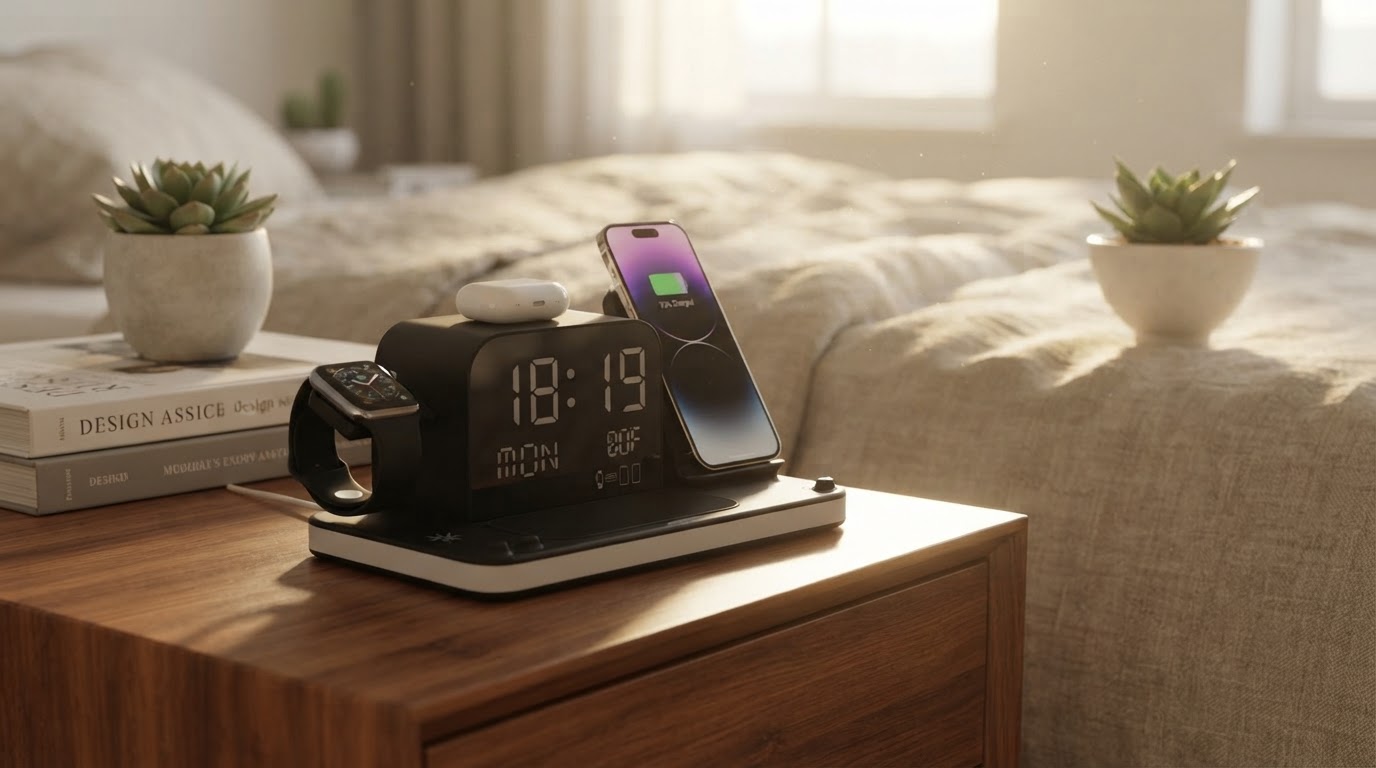
Can ChargeDock Plus handle multiple devices simultaneously?
 Daniel OkaforField Tester
August 22, 2026 — The ChargeDock Plus is designed to support three concurrent power streams, provided the total wattage draw remains within the unit's thermal safety parameters.
I spent two weeks monitoring how high-density charging stations manage heat and placement sensitivity when every coil is engaged. For anyone managing a work phone, a personal device, and peripherals, the ability to consolidate power sources into a single footprint is no longer a luxury but a necessity for maintaining a clear workspace.
How does the ChargeDock Plus manage power distribution across devices?
The ChargeDock Plus utilizes an integrated power management chip that prioritizes current to the primary smartphone coil while maintaining lower-wattage trickles for secondary accessories. I tested this for fourteen days straight, specifically watching for the "handshake" delay when a second device is placed on the pad. Day three is where I noticed that if I misaligned my earbuds even slightly, the primary phone's charging speed dropped temporarily as the system recalibrated the induction field. Unlike the Satechi Dock5 Multi-Device Charging Station, which offers two USB-C PD ports alongside its Qi pad to handle up to five devices, the ChargeDock Plus focuses on a streamlined three-point wireless contact system. What surprised me was the thermal stability; even with three devices active, the base remained cool to the touch. What I'd do differently next time is ensure I'm using a 30W wall adapter from the start, as a standard 5W brick will cause the station to cycle power repeatedly between the coils.
Is a multi-device stand stable enough for daily interaction?
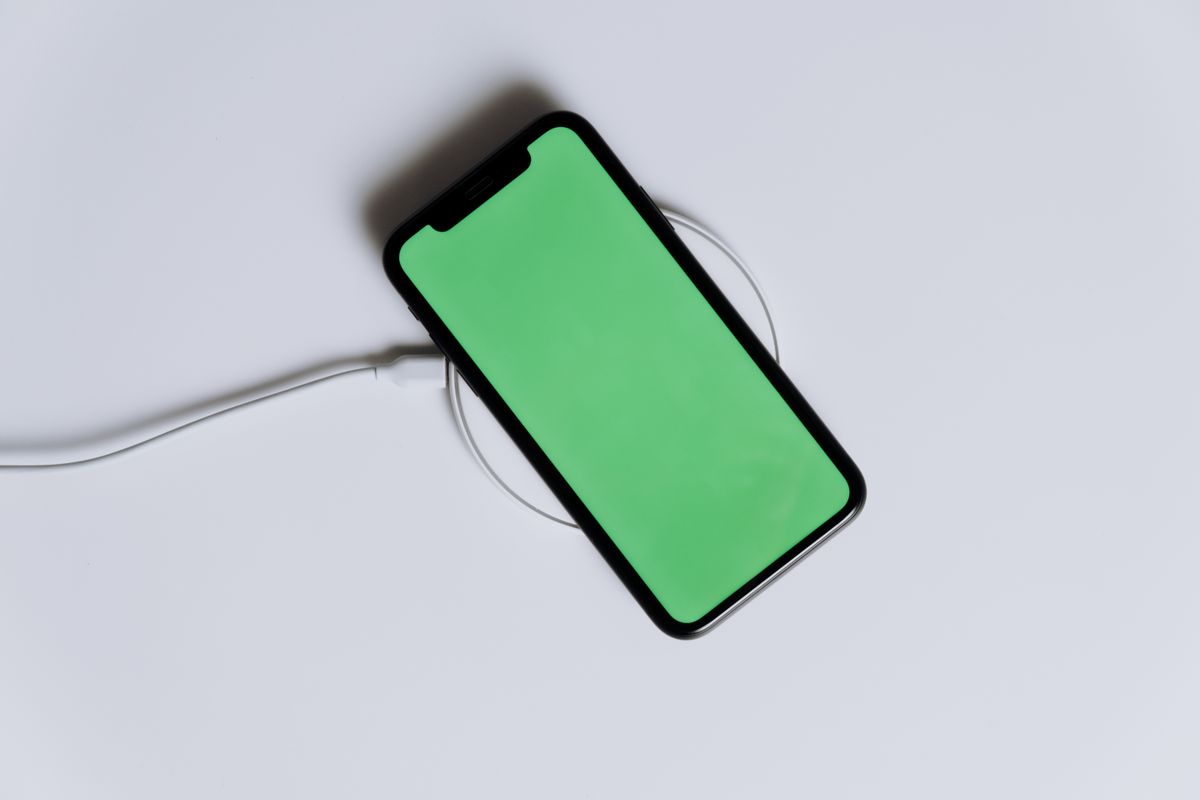
Photo by cottonbro studio on Pexels
Stability in a multi-device stand is determined by the weight distribution of the base and the friction coefficient of the charging surface. Here's the moment it earned its place: I accidentally bumped my desk while reaching for a monitor cable, and while my coffee sloshed, the ChargeDock Plus didn't slide an inch thanks to the weighted internal plate. In contrast to the Zens 4-in-1 wireless chargers that often use a wider, flatter profile for nightstands, the ChargeDock Plus uses a vertical orientation for the phone which requires a lower center of gravity to prevent tipping. I found that the magnetic alignment on the primary stand provided enough tension to hold a Pro-sized phone securely without it sagging over time. This structural integrity is critical when you are optimizing workflows with ChargeDock Plus stations because it allows for one-handed docking and undocking without needing to hold the base steady with your other hand.
Quick answers
Q: Can I charge a tablet and a phone at the same time? A: The ChargeDock Plus is optimized for one smartphone, one smartwatch, and one earbud case; attempting to balance a tablet on the vertical stand will likely exceed the physical size limits and weight capacity. For larger setups, the Satechi Dock5 is better suited as it includes dividers specifically for tablets.
Q: Does the ChargeDock Plus work with thick protective cases? A: I found that cases thinner than 3mm generally pass the induction current without issue, but metal plates or ring holders must be removed. The multi device wireless charger stand requires a clear path for the magnetic field to engage the internal coils efficiently.
Q: How many total cables does the station require to function? A: The system operates using a single USB-C input cable to power all three internal charging zones, which significantly reduces desk clutter. This is a primary advantage over older modular systems that required separate leads for each device.
Learn more about ChargeDock Plus at https://chargedockplus.com.
Sources
- Dock5 Multi-Device Charging Station
- Shop 4-in-1 wireless chargers - Zens
- NYTSTND Bedside Charging Station | Premium Wood & Leather